Running a dental practice is one thing. Keeping your appointment book consistently full is another.
You may have a good team, experienced dentists and quality treatments, but if new patient enquiries are inconsistent, something in your marketing strategy may be missing.
The problem isn't always a lack of website traffic or advertising. Sometimes, potential patients are finding your practice but choosing another clinic.
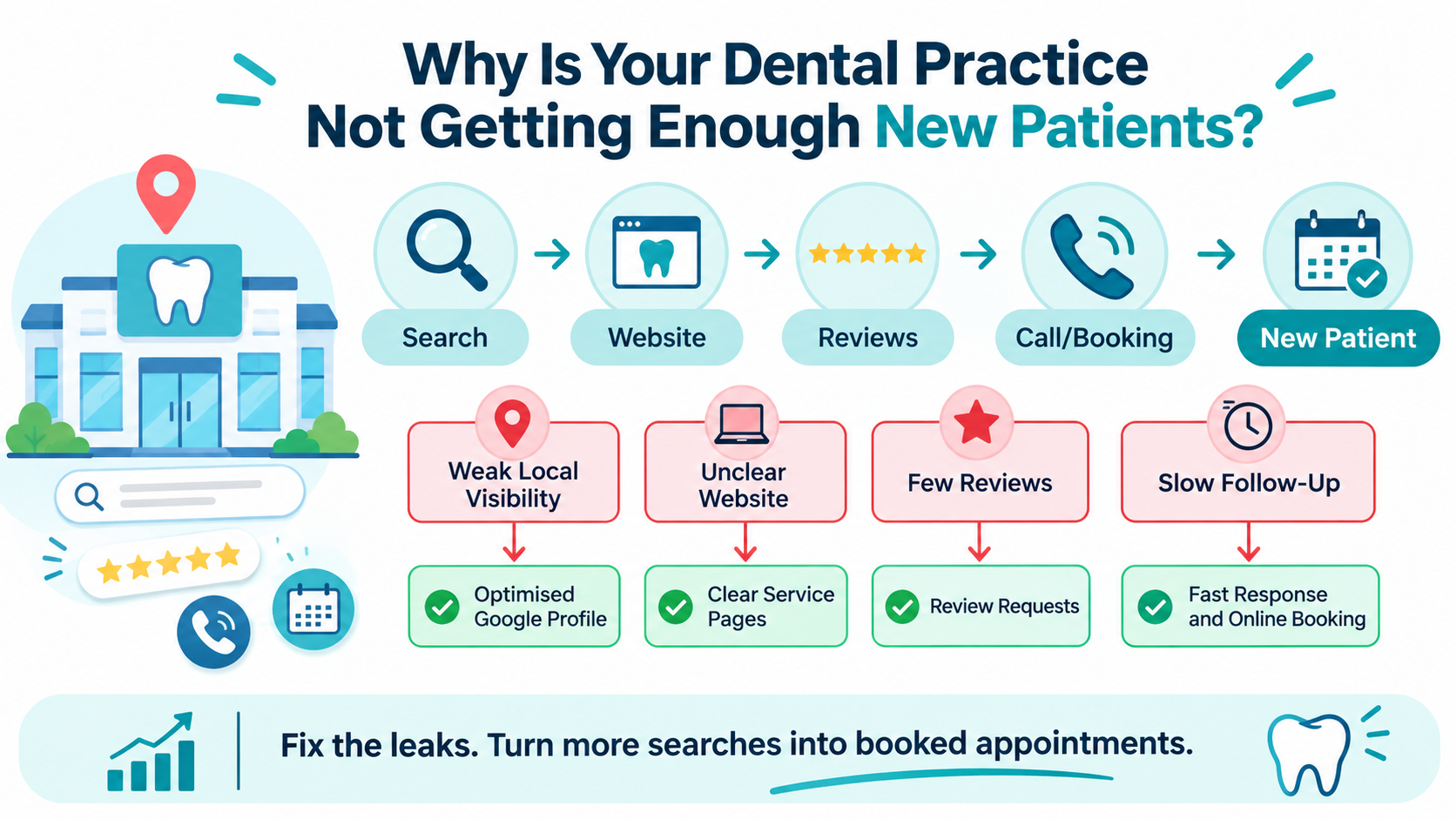
Let's look at some common dental marketing gaps and what you can do to fix them.
When someone searches for a dentist in their suburb or looks for a specialist treatment, does your practice appear?
Think about what happens when someone searches for "dentist near me" or "emergency dentist in [your suburb]". If your practice doesn't appear prominently, you're missing opportunities to connect with people actively looking for dental care.
How to fix it:
Local SEO helps your practice reach people searching for dental services in your area.
Getting website traffic is encouraging, but traffic alone doesn't bring new patients.
If visitors cannot easily find your services, understand what makes your clinic different or book an appointment, they may leave and visit another dental website.
How to fix it:
Your website should make the next step obvious, not leave potential patients guessing.
Your Google Business Profile is often one of the first things potential patients see when searching for a local dentist.
Outdated opening hours, missing treatment information, incorrect contact details or incomplete profiles can create unnecessary uncertainty.
How to fix it:
Keep your profile updated with accurate business information, relevant services, current photos and appointment links. Monitor patient reviews and respond professionally.
Small improvements can make your practice easier to understand and contact.
Choosing a dentist is a personal decision. Patients often want to know who will be treating them, what services are available and whether the practice feels right for them.
A website that only lists treatments and prices may not answer these questions.
How to fix it:
Introduce your dental team, highlight relevant qualifications and experience, explain treatment processes and publish helpful educational content. Use genuine clinic photography and make your practice's approach to patient care clear.
Trust is built through consistent, accurate information, not exaggerated marketing claims.
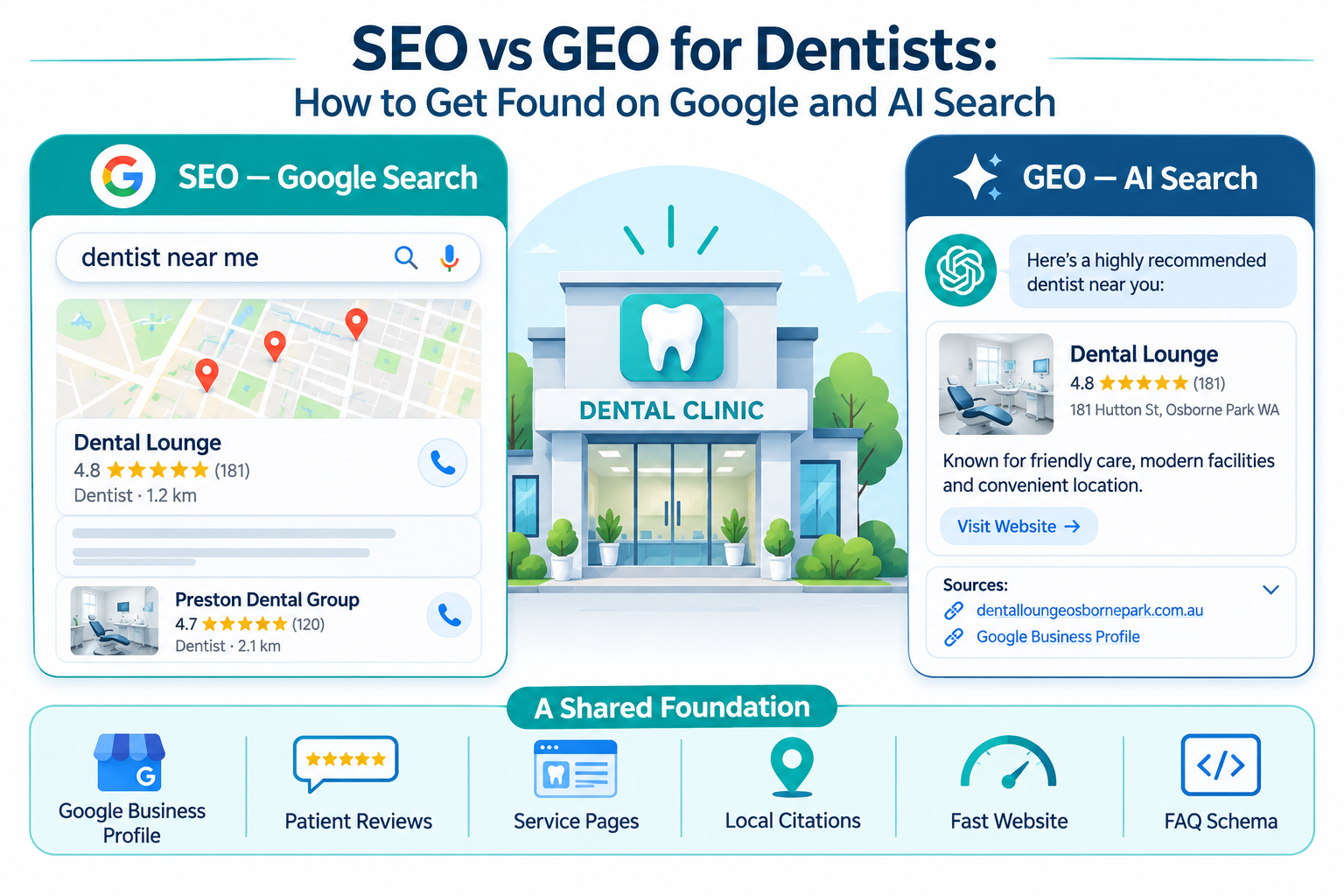
Patients are no longer relying only on traditional Google searches. Patients are also asking questions on ChatGPT and other AI-powered platforms to research treatments, compare options and discover dental practices.
For example, someone might ask, "What should I look for when choosing a dental implant specialist in Brisbane?"
If your website clearly explains your services, includes useful treatment information and demonstrates practitioner expertise, it gives search engines and AI platforms more context about your practice.
How to fix it:
Create helpful content that answers real patient questions, explain treatments clearly, include practitioner expertise and keep your business information consistent across relevant platforms.
This is where combining traditional SEO with Generative Engine Optimisation (GEO) can help strengthen your online visibility.
You might be investing in SEO, Google Ads or social media, but do you know which channels are actually generating patient enquiries?
Without tracking results, it's difficult to understand what's working and where your marketing budget should go.
How to fix it:
Track website enquiries, phone calls, booking form submissions and relevant conversion actions. Use tools such as Google Analytics 4 and Google Search Console to understand website performance.
Review the quality of enquiries too. More traffic doesn't necessarily mean more new patients.
If your dental practice isn't attracting enough new patients, the answer isn't necessarily to spend more on advertising.
Start by identifying where potential patients are dropping off. Are they unable to find your practice on Google? Are they visiting your website but not booking? Or are they choosing another clinic because they feel more confident in its online presence?
A well-planned dental marketing strategy should address all these areas, from local SEO and website performance to patient trust, AI visibility and enquiry tracking.
At 360 Dental Marketing, we help dental practices improve their online visibility and build marketing strategies designed to attract more relevant patient enquiries.
Want to find out what's missing from your dental marketing? Talk to our team about improving your practice's online presence.