The way patients find a dentist is changing.
Not long ago, someone looking for a dentist would simply search Google for "dentist near me" or "emergency dentist in Melbourne" and compare the clinics listed on the first page.
Today, the search journey can look quite different. Patients are also asking ChatGPT, Google AI Overviews and other AI-powered platforms questions such as:
This shift has introduced two important terms in digital marketing: SEO and GEO.
But what do they actually mean for your dental practice?
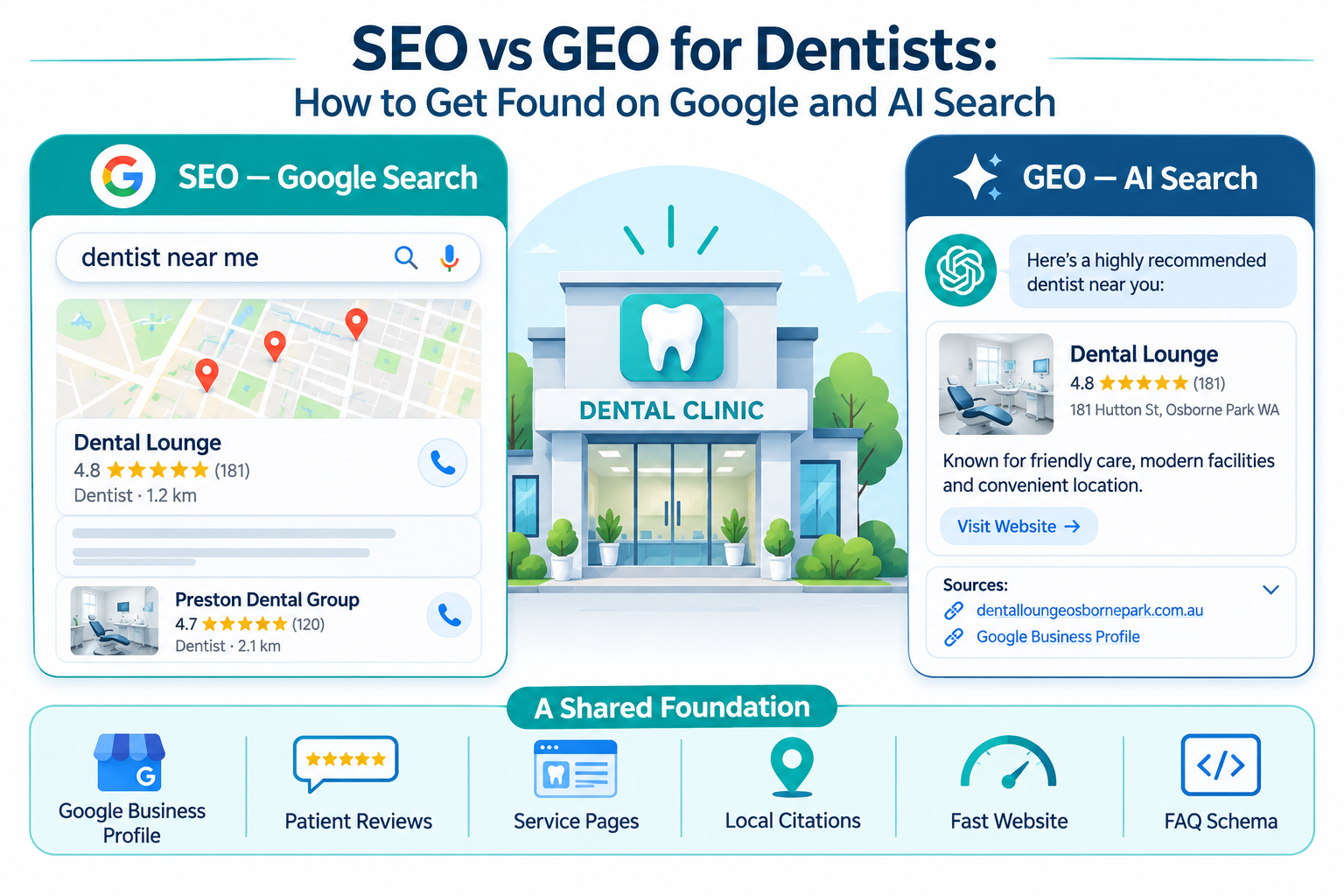
Both strategies aim to improve online visibility, but they approach search differently.
| SEO | GEO |
| Focuses on traditional search results | Focuses on AI-generated answers |
| Targets relevant search terms | Targets conversational questions and topics |
| Improves Google rankings | Builds visibility in AI search experiences |
| Uses technical SEO and local optimisation | Focuses on content clarity, expertise and online authority |
| Helps patients discover your website | Helps your practice become a potential source in AI responses |
The important thing to understand is that GEO is not a replacement for SEO. Strong SEO foundations also support visibility across Google's AI-powered search experiences.
You don't need two completely separate marketing strategies. Much of the work that makes your website useful for Google also helps AI platforms understand your practice.
Here are five areas worth focusing on.
1. Build Useful Treatment Pages
Don't just create pages that mention dental implants, Invisalign or veneers. Explain the treatment, who it may be suitable for, what patients can expect and common questions they may have.
Make sure the information is accurate and reviewed by an appropriately qualified dental professional.
2. Answer the Questions Patients Actually Ask
Think about the questions your reception team hears every week.
Questions about treatment costs, appointment availability, recovery, eligibility and treatment options can all provide ideas for useful website content.
Clear answers are more valuable than articles written simply to include more keywords.
3. Strengthen Your Local Online Presence
Your Google Business Profile, website location details, contact information and local listings should all provide consistent information.
Local relevance remains important when patients are looking for a dentist in their suburb or nearby areas.
4. Demonstrate Experience and Expertise
Dental content needs to be trustworthy. Include relevant practitioner information, clinical qualifications, author details and expert reviews where appropriate.
Avoid unsupported treatment claims or generic information that could apply to every dental clinic.
5. Keep Your Website Technically Sound
Make sure Google can crawl and index your website, important content is accessible, pages work well on mobile devices and your internal links make sense.
Structured data can also help search engines understand your practice and its services when implemented correctly.
Absolutely.
Google remains an important part of how patients discover dental practices, and AI-powered search is adding another layer to that journey.
The practices that focus only on traditional keyword rankings may miss emerging opportunities. Equally, focusing only on AI visibility without building a strong website and local presence is unlikely to deliver sustainable results.
At 360 Dental Marketing, we believe the better approach is to bring SEO, GEO and local search optimisation together.
Your dental practice needs to be visible when someone searches Google, but it should also have a strong and trustworthy online presence when patients turn to AI for recommendations and information.
The goal is simple: help the right patients find your practice, wherever they choose to search.
Looking to improve your dental practice's visibility on Google and AI search?
Talk to the 360 Dental Marketing team about building an SEO and AI visibility strategy for your practice.